
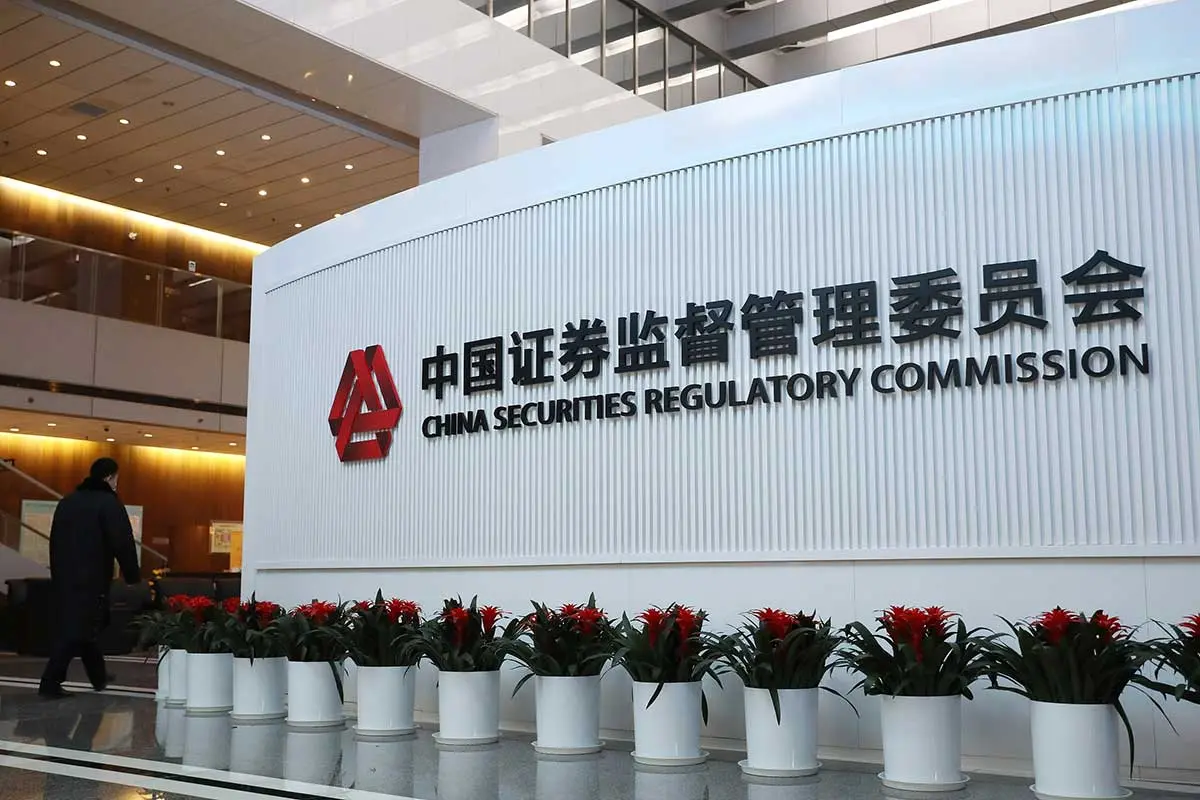
On the evening of April 24, the China Securities Regulatory Commission issued the "Rules for the Supervision of Secretaries of the Board of Directors of Listed Companies" (hereinafter referred to as the "Rules for the Secretary of the Board of Directors"), which will be officially implemented on May 24. This is the first regulatory regulation issued by the China Securities Regulatory Commission specifically for the secretary of the board of directors of a listed company.
Compared with the previous draft for comments, the official version further clarifies that the secretary of the board of directors cannot hold the positions of general manager, deputy general manager in charge of business or financial director at the same time.
At present, the secretaries of the board of directors of many listed companies hold other senior management positions. For example, in the banking industry, the reporter found that nearly 70% of the board secretaries of listed banks are also core management members such as vice presidents and chief financial officers.
After the implementation of the new regulations, such concurrent positions will no longer be allowed.
Nearly 70% of listed banks have executives as secretaries, and the new regulations will change this practice
At present, the secretary of the board of directors of many listed banks (referred to as the "secretary") is concurrently served by the vice president or other senior executives, especially in large and medium-sized banks.
For example:
Ji Zhihong, vice president of China Construction Bank, will concurrently serve as secretary of the board of directors from April 2025; Liu Chenggang, vice president of Bank of China, will also serve as secretary of the board of directors from December 2025; Du Chunye, vice president of the Postal Savings Bank, also serves as secretary of the board of directors and joint company secretary; Peng Jiawen, vice president of China Merchants Bank, and Yang Wei, vice president of Huaxia Bank, not only serve as secretary of the board of directors, but also as financial directors.
According to Wind statistics, among the 42 A-share listed banks, only about 12 have full-time board secretaries, and the remaining nearly 70% are concurrently held by senior executives such as vice presidents, chief financial officers, chief risk officers or assistant to the president. Among them, the vice president holds concurrent positions in about one-third.
For a long time, banks have formed the habitual practice of "vice president and secretary of the board of directors". Some people believe that this is because the position of board secretary is highly professional - it is necessary to understand information disclosure and compliance, as well as to be familiar with the bank's complex business (such as credit, risk control, asset and liability management) and regulatory rules. Allowing the vice president to concurrently serve can ensure that the secretary of the board of directors has internal information and is more authoritative and professional in external communication.
But the question also arises:
The secretary of the board of directors should have independently supervised the company's information disclosure and governance compliance, and if he participated in operation and management at the same time, it would be easy to "be both a player and a referee". This can lead to oversight failures, unfair information disclosure, and even compliance and operational risks.
To this end, the latest "Supervision Rules for Board Secretaries of Listed Companies" issued by the China Securities Regulatory Commission clearly requires that the secretary of the board of directors shall not concurrently hold the positions of general manager, deputy general manager in charge of business or financial officer. The new regulations will come into effect on May 24.
With "independence" as the core, this regulation draws a clear boundary between the responsibilities of the board secretary and management, prevents conflicts of interest, ensures that the board secretary can truly perform key responsibilities such as information disclosure, corporate governance and compliance supervision independently and impartially, and builds a solid internal control line of defense for financial institutions.
With the implementation of the new regulations, banks will usher in a "wave of adjustment of board secretaries"
With the official introduction of the "Rules for the Supervision of Board Secretaries of Listed Companies", listed banks will soon begin to adjust their senior management arrangements.
But the adjustment of banks is more complex than in other industries: the new secretary of the board must first pass the qualification approval of the State Administration of Financial Supervision and Administration (and its local dispatched agencies) before he can take up his post. This process usually takes two or three months or more, while executive adjustments in ordinary industries can be completed in a month or two.
This means that banks have to meet the two sets of time requirements of the China Securities Regulatory Commission and the financial regulatory authorities at the same time, which is more difficult to coordinate.
For many small and medium-sized banks, the problem is even more difficult: there are few full-time board secretaries who understand banks and have professional capabilities in compliance and information disclosure, and the supply of talents is tight.
Some brokerage analysts said that there may be two approaches next: some banks promote middle-level cadres with legal or compliance backgrounds from within; Others introduce professional board secretaries from outside.
In the short term, banks need to reorganize the division of labor among executives, facing the pressure of organizational adjustment and talent shortage.
However, the good news is that the new regulations give a transition period and will not be fully implemented until the end of 2027. This leaves enough time for banks to recruit and cultivate talents, and gradually complete job adjustments.
In the long run, this reform is of great significance:
it pushes financial institutions to bid farewell to the old path of "focusing on business over compliance" and establishing a modern governance structure with clear rights and responsibilities and mutual checks and balances.
In the future, bank information disclosure will be more transparent, corporate governance will be more standardized, and the trust of the capital market in financial enterprises will also be enhanced, laying a solid foundation for the high-quality development of the entire industry.
Three types of influence, two types of opportunities
This time, the China Securities Regulatory Commission is not a minor repair, but a fundamental cut off of "interest binding" and forced financial institutions to bid farewell to the old era of "focusing on performance and neglecting governance".
In the short term, banks should "replace, add money, and adjust the structure"; In the long run, cleaner, more transparent and more credible Chinese financial stocks are worthy of the favor of global capital.
Impact 1: Short-term governance costs are rising
Banks need to add full-time board secretary positions, increasing manpower and compliance costs; If the adjustment lags behind during the transition period, it may face regulatory inquiries or rating downgrades.
Impact 2: The quality of information disclosure will be systematically improved
The independent secretary of the board of directors dares to tell the truth, and the financial report and disclosure of major matters will be more transparent and timely; Reduce old problems such as "selective disclosure" and "vague expression".
Impact 3: Intensified corporate governance differentiation
large banks (such as industry, construction, and recruitment) have sufficient talent reserves, rapid adjustment, and further expanded governance advantages; If small and medium-sized banks are slow to respond, they may be labeled as "weak governance" by the capital market, and their valuations will be under pressure.
Opportunity 1: Focus on leading banks in governance
Banks such as China Merchants, Ningbo, and Ping An that have already implemented a relatively independent board secretary system will receive a "governance premium"; ESG ratings are expected to improve and attract long-term funding.
Opportunity 2: Benefit from compliance and board secretary service tracks
The demand for third-party services such as professional board secretary headhunting, compliance consulting of listed companies, and information disclosure SaaS tools has surged; The corporate governance consulting business of law firms and accounting firms has ushered in a new outlet.