The instant retail sector is stirring up waves again, and this time, Alibaba chose to go all out with 'buy, buy, buy.'
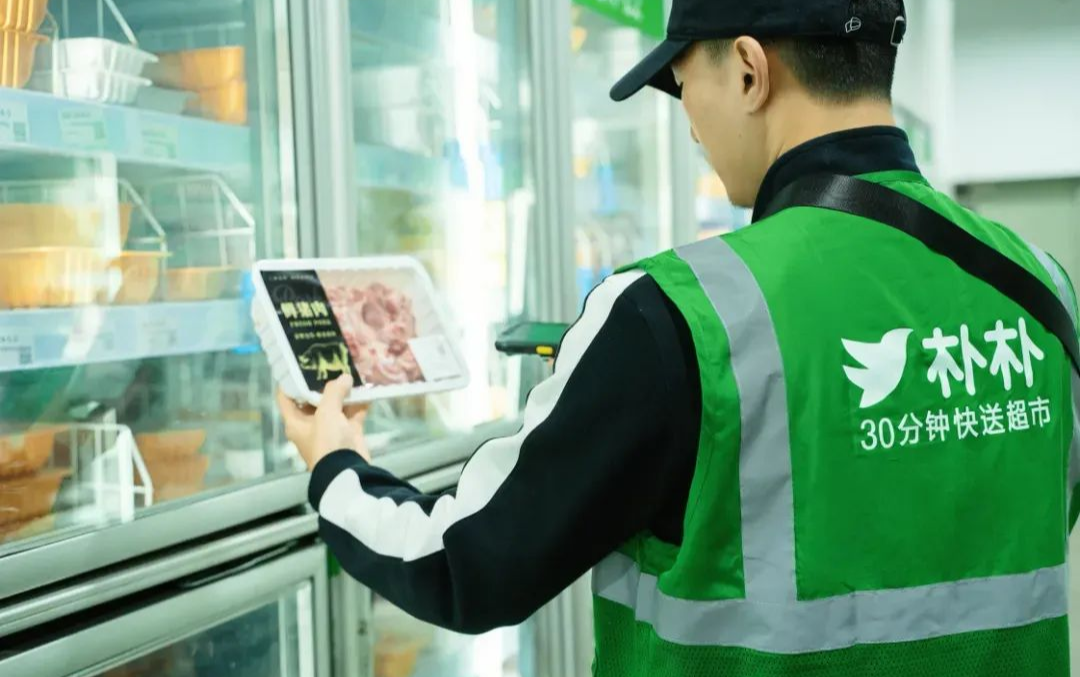
Reportedly, Alibaba is bidding for a high price of $1.5 billion for the front warehouse fresh food platform Pupu Supermarket. This offer is more than twice that of Sun Art Retail's previous offer, demonstrating Alibaba's determination to win the instant retail sector.
Alibaba is using real money to "draw a sword" against Meituan. The $1.5 billion purchase of Pupu is not just about buying a few warehouses, but a key step for Alibaba to fill its gaps in the South China market and exchange heavy assets for instant retail tickets. To win this battle, Alibaba has already begun major internal integration, consolidating businesses like Hema and preparing to battle Meituan to the end in the instant retail finals.
| The $1.5 billion premium is about buying "regional barriers" and "competitive chips"
Why is Alibaba willing to pay such a high premium for Pupu Supermarket? The core is that Pupu is one of the few independent players in the front warehouse sector that has truly mastered a profit model.
The core logic of front warehouses is that "density equals barriers." Pupu compressed the distribution radius to 1.5 to 3 kilometers, with a single warehouse SKU of 6,000 to 8,000, truly achieving high-density regional warehouse deployment.
In Alibaba's view, the competitive barriers in instant retail have shifted from traffic to "supply chain and asset density." Acquiring Pupu is essentially Alibaba's core leverage to leverage heavy assets for the instant retail sector. Once merged, it will greatly increase Taobao Flash Sale's inventory depth and user stickiness.
| Internal organization consolidation
Behind this heavy-spending acquisition lies a quiet but profound internal organizational transformation at Alibaba. According to media reports, Hema CEO Yan Xiaolei's reporting line has been adjusted to report directly to Jiang Fan. This is seen as Alibaba's first step in unifying instant retail businesses such as Hema, Tmall Supermarket, and Taobao Flash Sale.
For the past decade, Alibaba has long been fragmented and fragmented in the instant retail sector. Now, management has reached a consensus: it must first gain enough mindset in users' most frequent food delivery scenarios to have the foundation for non-catering operations.
Alibaba is promoting the unification of all business operations under the "Taobao Flash Sale" brand, so consumers no longer need to distinguish between Hema and Tmall Supermarket—just one reason to open the app.
|From decentralized operations to a long-term battlefield where "must win" is achieved
Alibaba's entry into instant retail is not new, but this round of layout is fundamentally different from previous ones. Core management has listed instant retail as the "core strategy," aiming to capture the top market share.
Alibaba clearly recognizes that food delivery is the core category for cultivating user mindshare, and securing 40% to 50% market share is a prerequisite for competing. Only by unifying front-end brands can the back-end supply advantage be fully leveraged.
This bidding war around Pupu Supermarket is Alibaba's key move on the supply side, marking the official entry into the second half of the oligopoly game in instant retail competition.
Kingtech Perspective | Instant retail enters the decisive phase of "heavy assets and supply chains."
The competitive barriers in instant retail have fundamentally shifted, shifting from the early "traffic subsidy war" to a hardcore competition of "supply chain and asset density." Front warehouse networks, fulfillment capabilities, and regional operational experience have become core assets that giants are eager to compete for at great expense.
Industry concentration is accelerating, mergers and acquisitions have become the norm, and as independent players like Pupu are included in the giant territory, the independent survival space in the instant retail sector is becoming increasingly limited. In the future, market share will accelerate to concentrate among leading ecosystems such as Alibaba, Meituan, and JD.com.
Focus 1: Instant retail leaders with core fulfillment networks
Under the logic of "heavy assets," leading platforms with high-density front warehouse networks, mature supply chains, and efficient fulfillment systems will receive significant valuation premiums.
Focus 2: Supply chain service providers deeply tied to the ecosystem of industry giants
With giants like Alibaba and Meituan making heavy investments in instant retail, providing infrastructure such as warehouse automation, cold chain logistics, and fresh food supply chains, the market will see a definite growth market.