
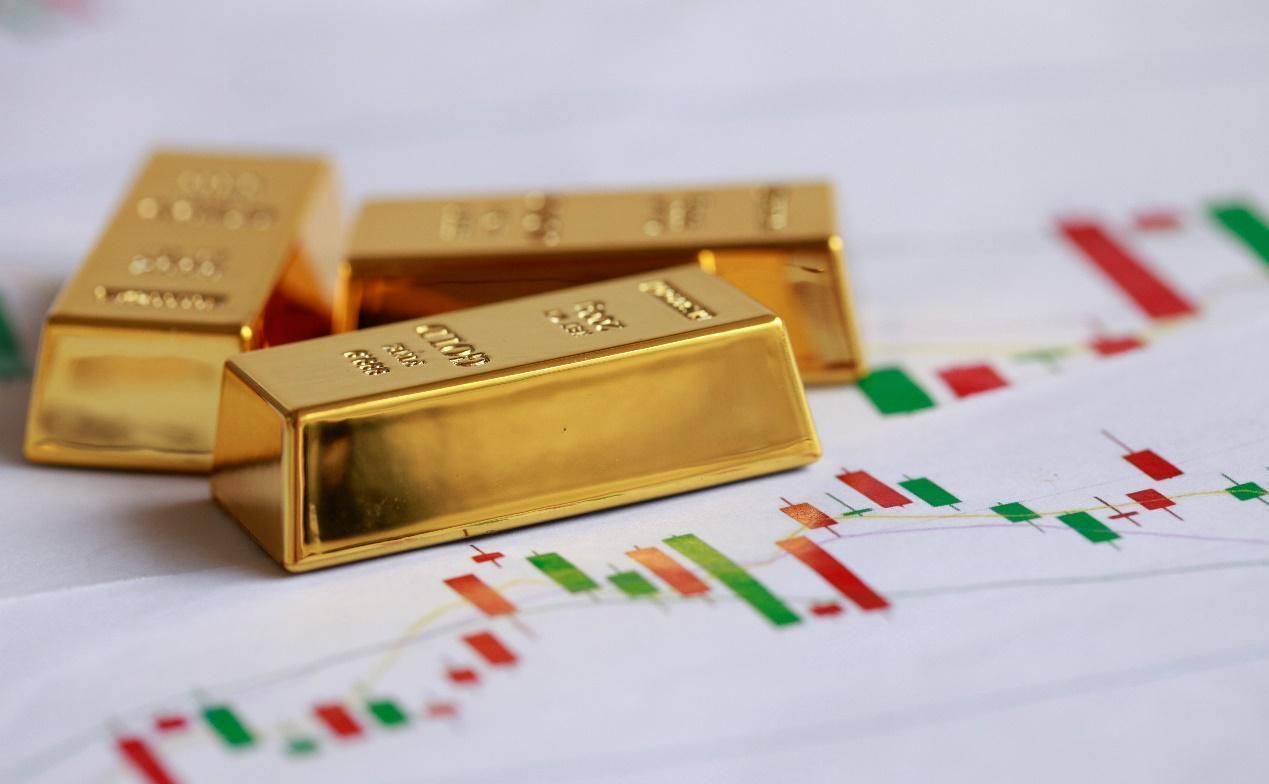
Recently, the gold market has been experiencing a "perfect storm."
Under the concentrated impact of rising rate hike expectations, some central banks being forced to sell reserves, and tech giants redirecting funds through IPOs, gold prices have fallen to a six-month low, potentially marking their worst quarterly performance in nearly a decade. Last Thursday, gold prices briefly fell below the $4,100 mark. Although they rebounded somewhat, since the outbreak of the Middle East conflict in February this year, gold prices have fallen more than 20% cumulatively.
The recent drop in gold is mainly due to the "three major mountains" pressing down: the Federal Reserve may not cut rates but may actually raise rates; the Middle East wars forced some countries to sell gold for cash; combined with tech giants like SpaceX going public, all the market funds were drained.
In the short term, gold's "safe-haven aura" was completely suppressed by high interest rates and capital diversion.
| Major reversal in rate hike expectations: The "cost" of holding gold has risen
The core trigger for this sharp drop in gold prices is the fundamental reversal of market expectations for the Fed's interest rate path.
Affected by inflationary pressures triggered by soaring oil prices, traders have shifted from expecting "two to three rate cuts within the year" at the beginning of the year to expecting "one rate hike within the year."
Gold itself is a non-yielding asset. When U.S. Treasury yields soar and expectations of interest rate hikes heat up, the opportunity cost of holding gold increases sharply, and funds naturally vote with their feet. Data shows that from March to May this year, global gold ETFs saw net outflows of 55 tons, ending a nine-month streak of net inflows, with institutional funds accelerating their withdrawal.
| The central bank is forced to "cut losses," intensifying short-term supply pressures
Besides the outflow of macro funds, the outbreak of war in the Middle East has also triggered a "liquidity crisis" for some central banks, forcing them to liquidate their gold reserves to defend their currencies or fill fiscal gaps. For example, Turkey recently sold gold reserves worth $20 billion, and Russia is also selling gold.
However, investors need to view this phenomenon rationally.
These sell-offs are passive responses and do not represent a shift in the overall stance of global central banks. In fact, global central banks as a whole remain net buyers of gold, with gold even surpassing US Treasuries at the end of last year to become the most valuable single category of global reserve assets.
Short-term passive sell-offs do not change the long-term strategic allocation logic.
| Tech IPOs 'Draw Blood': Gold Loses Its 'Narrative Advantage'
Besides macro and geopolitical factors, the upcoming wave of tech giant IPOs is frantically draining market liquidity. SpaceX plans to launch a large-scale IPO, and Anthropic and OpenAI are also preparing for IPOs.
Analysts point out that these major IPOs constitute a recent "liquidity withdrawal event."
Investors are looking for the next "big opportunity" to sustain market enthusiasm, and SpaceX and AI giants are clearly more attractive than the currently struggling gold.
As retail funds withdraw and institutional funds shift toward tech IPOs, gold's previous bullish narrative is facing a severe test.
Kingtai's Perspective | Avoid sharp moments in the short term, wait for a turning point in the long term
The high interest rate environment is suppressing gold prices, making it hard to say a bottomout in the short term
Until the Fed clearly signals rate cuts or inflation substantially declines, high real interest rates will continue to weigh on gold prices. In the short term, gold is highly likely to remain weak and volatile, seeking support at the bottom.
The siphon effect of tech IPOs: Be wary of liquidity risks
Around the time of major IPOs like SpaceX, market funds will be highly concentrated in the technology sector. Gold, as a non-yielding asset, will further marginalize its liquidity.
For short-term investors, it is not advisable to blindly "catch a flying knife" at this time. It is recommended to closely monitor U.S. inflation data and the Fed's policy meeting, waiting for rate hike expectations to cool down or gold prices stabilize at key technical levels before taking positions.
For investors looking to the long term, the current sharp drop actually provides a window to buy on dips. The global de-dollarization process and the underlying logic of central banks' long-term gold purchases remain unshaken. It is recommended to gradually build a base position by investing in batches after gold prices fully release risk.