
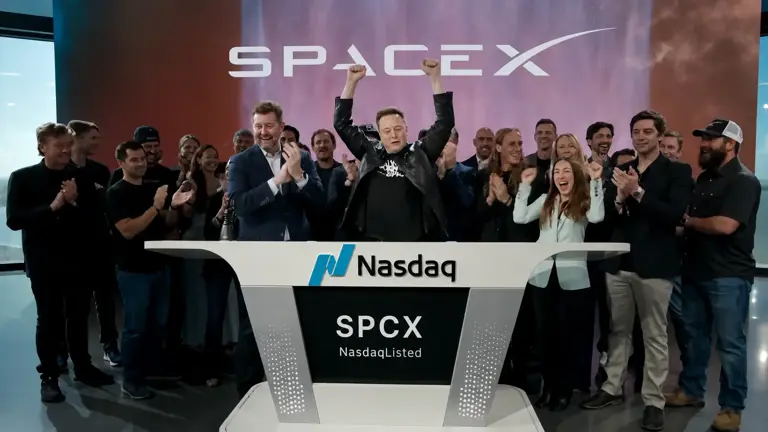
Global capital markets have just witnessed a historic moment. On June 12 Eastern Time, Musk's SpaceX officially listed on Nasdaq under the ticker name SPCX. On the first day, it surged 11% at the open, soared nearly 31% intraday, and ultimately closed up about 19.2%, with its market value surpassing $2.1 trillion, instantly ranking as the sixth largest company by market cap in the US market.
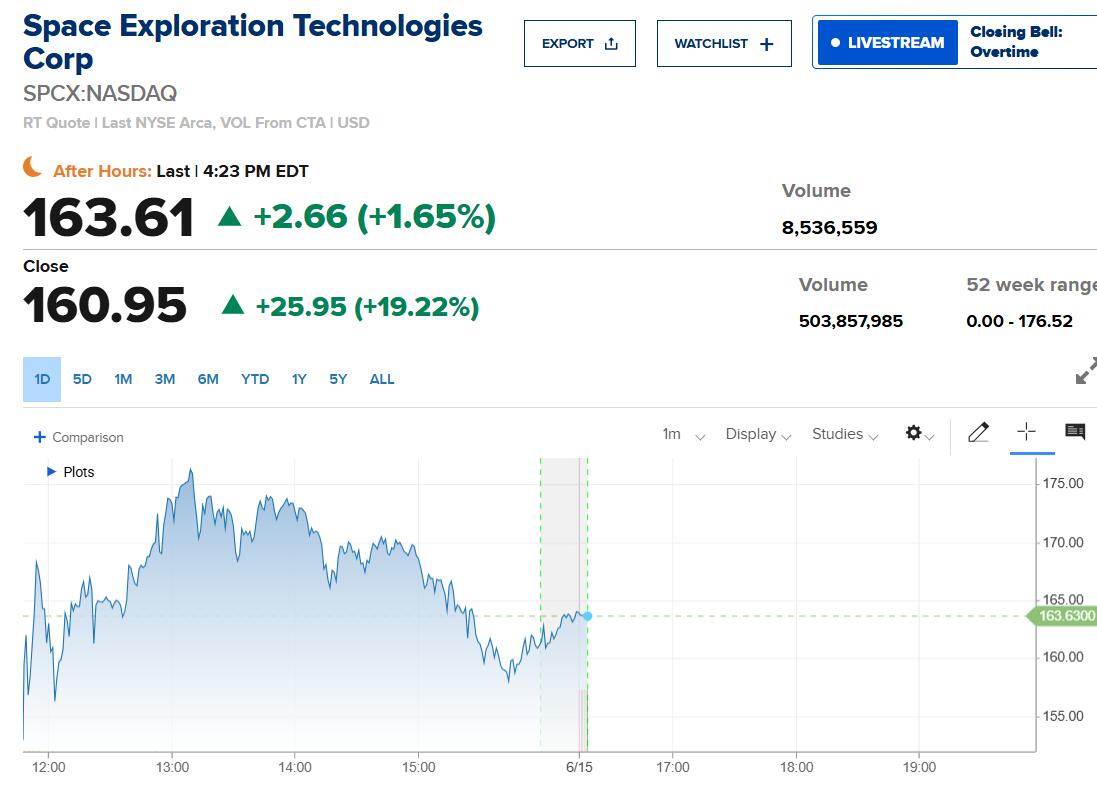
SpaceX's IPO broke global IPO fundraising records, and Musk became the first super-rich person in human history to surpass a trillion dollars. This is not just the listing of a rocket company, but a frenzied vote by global capital on the "space + AI" super narrative.
| Epic IPO, $75 billion raised
As the largest IPO in history, SpaceX's core fundraising reached $75 billion, more than double Saudi Aramco's previous record. The market's enthusiasm was beyond imagination, attracting over $350 billion in subscription funds.
In this fundraising battle, institutional investors contributed over $250 billion, with about 70% allocated to long-term funds and sovereign wealth funds (such as BlackRock, Saudi PIF, etc.). Even though SpaceX reserved about 20% of its shares exclusively to retail investors, nearly one-third of institutions still failed to get their allocations. Within just 20 minutes of trading, retail investors bought $18.1 million, making it the second hottest after Nvidia.
SpaceX's record-breaking IPO also served as a lesson for Wall Street investment banks, setting one of the lowest underwriting fee rates in history. Despite handling such a large deal, investment banks only managed to collect about $500 million in underwriting fees, which is only 0.67%. However, even with such a low rate, the stake is so large that this remains the highest-earning single transaction in Wall Street history. As the main underwriters, Goldman Sachs and Morgan Stanley each received about $100 million.
Even more outrageous, SpaceX has negotiated a rare "overbearing clause": investment banks have a right called the "greenshoe option" (an over-allotment option, usually used to stabilize stock prices during the initial listing phase). If the investment bank exercises this right and sells an additional 15% of its shares (worth about $11.25 billion), SpaceX will not give them a single cent. This means that investment banks have lost about $75 million in potential revenue for nothing.
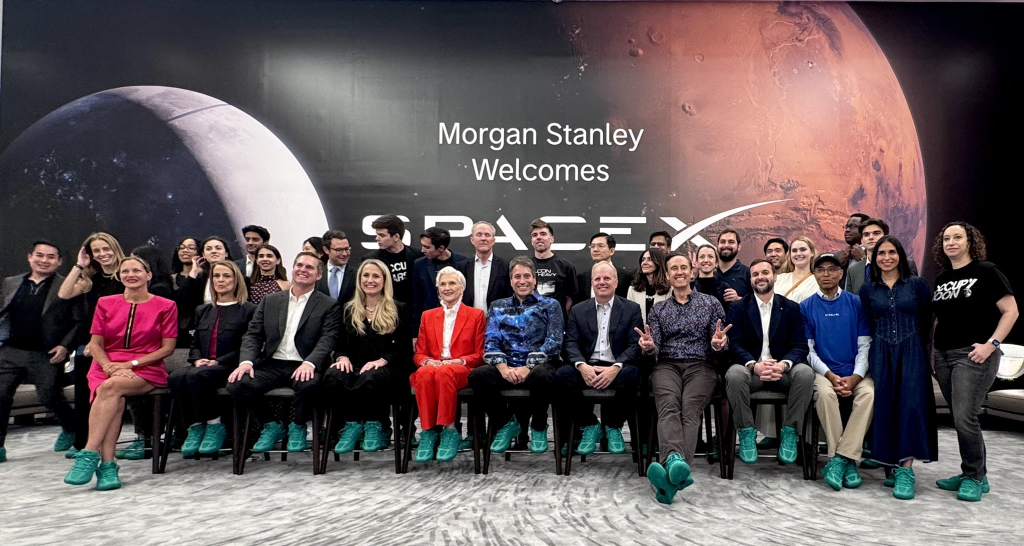
But what investment banks really focus on are the invisible "soft dollar" returns. They often "return" part of the profits to the investment bank through subsequent transaction commissions and other forms. The returns from this "soft dollar" could be several times higher than the obvious underwriting fees. Therefore, in this deal, investment banks like Goldman Sachs are expected to be the biggest winners.
| The siphon effect is evident
SpaceX's strong ability to attract funds directly triggered a "siphoning effect" in the capital market. Because a large amount of capital was diverted to participate in SpaceX's IPO subscription and trading, other space concept stocks that surged across the board on Thursday generally suffered heavy losses on Friday.
Space travel company Virgin Galactic Holdings (SPCE) plunged over 30%, and satellite communications company EchoStar (SATS), which holds shares in SpaceX, also plunged over 10%. This clearly shows that, amid the competition for existing funds, SpaceX's listing has created a significant capital crowding effect on other stocks in the same sector.
| Not just a rocket, but a "super technology platform"
In Wall Street's eyes, SpaceX is no longer just a rocket company, but a "super enterprise" integrating launch services, satellite internet, defense business, and AI infrastructure.
Sean Maguire, a partner at Sequoia Capital, even compared today's SpaceX to "Nvidia from three years ago" and expressed confidence in its explosive revenue growth. Bloomberg analysts point out that the AI startup xAI, acquired by SpaceX, could contribute more than 50% to its sales by the end of 2026, which will greatly support its high future valuation.
Regarding the use of this massive fundraising, SpaceX President and COO Gwynne Shotwell has given a clear direction: the funds will mainly be used for Starship's next-phase R&D and mass production, expansion of Starlink's global network, next-generation satellite manufacturing facilities, and deep space exploration projects. Musk also emphasized that the IPO is merely a tool to accelerate the long-term goal of "humanity becoming an interstellar civilization."
Kingtech Perspective | The space economy has entered a new era of "capitalization."
SpaceX's successful listing marks the official shift from a niche frontier sector to a mainstream new economy industry. The logic of global space economy competition has shifted from simple technological contests to systematic competition in technology, capital, and scenarios.
Focus on leading space infrastructure companies with "ecological closed loops."
SpaceX's high valuation stems from its three-dimensional commercial closed loop of "launch + Starlink + AI." In the future, companies with low-cost launch capabilities, large-scale networking capabilities, and scenario-based monetization capabilities will enjoy extremely high valuation premiums.
Be wary of the risk of differentiation caused by the "siphoning effect" within the same sector
SpaceX's super fundraising effect will lead to capital concentrating on the absolute leader. For small and mid-sized space concept stocks with single businesses and lack profit support, they may face short-term risks of liquidity withdrawal and valuation reversion, so investors need to be wary of the "blood-pumping" effect.
Valuation reshaping of the A-share aerospace industry chain
SpaceX's ultra-high valuation (price-to-sales ratio close to 100 times) will establish a new valuation benchmark for global commercial space. As domestic companies accelerate their catch up in fields such as recyclable rockets and satellite internet, leading A-share companies with core technologies and scaled operational capabilities are expected to undergo structural valuation revaluations.
The ringing bell for SpaceX's IPO is not only a highlight moment for Musk personally, but also a collective vote in global capital markets on the future direction of technology. Massive IPOs inevitably bring growing pains in market liquidity and sector fragmentation, but they also completely open up the commercial possibilities of the space economy.